

October 30, 2026
Harira: A Generational Indian Tradition of Postpartum Nourishment – Rediscovering Its Heritage with Happy Life India
The Story of Harira: A Tradition Passed Down Through Generations
Long before modern nutritional supplements, packaged health foods and wellness products became popular, Indian households had their own traditional ways of caring for new mothers. Among these beautiful food traditions was Harira – a rich, nourishing and warming preparation made with dry fruits, herbs, seeds, spices and other carefully selected ingredients.
For generations, Harira has held a special place in Indian family traditions, particularly in North Indian households. It was not simply considered another food item; it represented a mother’s care, a grandmother’s wisdom and a family’s responsibility towards the well-being of a new mother.
The recipe was traditionally prepared at home, often under the guidance of experienced women in the family. Grandmothers and mothers would carefully select ingredients, roast them in desi ghee, combine traditional herbs and spices, and prepare a rich mixture for the new mother.
Although the exact origin of Harira is not associated with one particular inventor or historical date, its place in Indian postpartum food traditions is well documented. Recipes and ingredients have varied across regions and families, but the underlying idea has remained similar: offering the mother nourishing, comforting food after childbirth.
Why Was Harira Traditionally Consumed After Pregnancy?
In Indian culture, childbirth has traditionally been considered a time when a woman deserves special attention, nourishment, rest and family support.
The period following delivery, commonly known as the postpartum period or Sutika Kaal in traditional Indian terminology, is an important transition for a mother. Her body goes through significant physical and hormonal changes, and appropriate nutrition becomes an important part of her recovery.
Traditionally, families followed special food routines during this period. Harira became one of the preparations associated with this care.
There were several reasons behind this conventional practice:
Restoring Energy After Childbirth
Childbirth is physically demanding. Traditional families believed that nutrient-rich foods containing dry fruits, ghee and other ingredients could help mothers regain their strength. Harira was therefore included as a nourishing addition to their daily food routine.
Traditional Postpartum Nourishment
Harira was valued for its combination of nuts, seeds, herbs and spices. These ingredients contribute energy and different nutrients to the diet, making the preparation a substantial traditional food.
A Part of Traditional Motherhood Care
In many Indian families, preparing Harira for a new mother was an expression of love and responsibility. The preparation was often undertaken by mothers, grandmothers or other senior women who passed down their recipes and food practices to the next generation.
The Tradition of Warming Foods
Indian food culture has long included the concept of warming and cooling foods. Ingredients such as dry ginger, ajwain and selected spices were traditionally incorporated into postpartum preparations. Harira became associated with this traditional approach to post-delivery food.
A Tradition Associated with Breastfeeding
Harira has also been consumed traditionally by breastfeeding mothers. Some families believed that its ingredients supported lactation. However, traditional beliefs about milk production should not be confused with established clinical evidence. Adequate nutrition, hydration and appropriate medical support remain important during breastfeeding.
What Makes Traditional Harira So Special?
The beauty of Harira lies in its ingredients and the thought behind their combination.
Unlike ordinary sweet preparations, traditional Harira brings together several ingredient categories that have long been valued in Indian kitchens.
- Premium dry fruits: Almonds, cashews, raisins and other nuts provide energy, healthy fats and important nutrients.
- Traditional seeds: Selected seeds contribute additional nutritional variety.
- Warming spices: Traditional spices add distinctive flavour and warmth.
- Herbal ingredients: Selected herbs reflect the traditional character of the preparation.
- Desi ghee: Traditionally used for roasting and bringing the ingredients together.
Different households have their own recipes, and the proportions and ingredients may vary according to regional traditions and family preferences.
This diversity is part of what makes Harira such an interesting part of India’s culinary heritage.
From Grandmother’s Kitchen to Modern Households
There was a time when preparing Harira required considerable effort.
The ingredients had to be purchased individually, cleaned, roasted and prepared in the correct proportions. The entire process required time, experience and attention.
In traditional households, this responsibility was often taken up by mothers and grandmothers, who understood the preparation through years of experience.
But modern lifestyles have changed. Families are increasingly nuclear, people have demanding schedules, and traditional recipes that require extensive preparation are becoming less convenient to make at home.
Does that mean we should allow such valuable food traditions to disappear?
Absolutely not!
This is where Happy Life India brings a meaningful connection between traditional food heritage and modern convenience.
Happy Life Harira Since 2019: Preserving Tradition with a Commitment to Quality
At Happy Life India, we believe that some traditions deserve to continue across generations.
Harira is one such tradition.
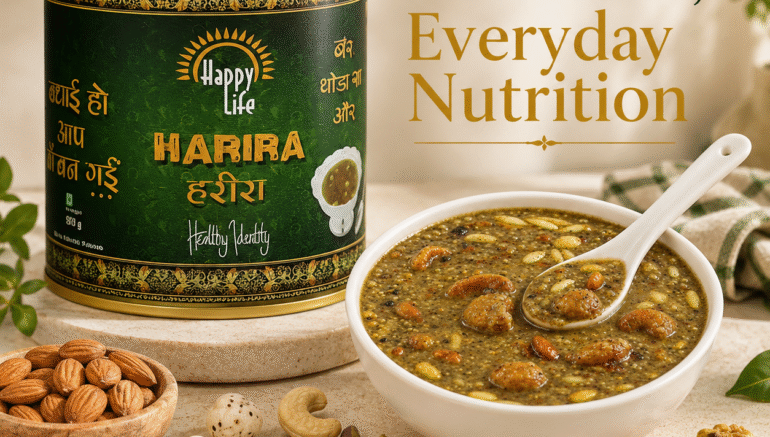
Our Harira reflects the richness of traditional Indian food culture, bringing together premium dry fruits, selected herbs and rich spices in a convenient preparation.
With approximately 30 years of experience in the herbal and traditional food segment, Happy Life has developed its identity around quality, hygiene and the preservation of traditional food practices.
What makes Happy Life Harira special is the philosophy behind the product:
1. A Traditional Preparation with a Distinctive Identity
Happy Life Harira is inspired by the traditional preparation that Indian families have cherished for generations. It brings the familiar character of traditional Harira into today’s households.
2. Carefully Selected Ingredients
The product’s identity revolves around the combination of dry fruits, royal herbs and rich spices, bringing together ingredients that have a long-standing place in Indian food traditions.
3. Attention to Hygiene and Quality
At Happy Life, quality is an important part of the preparation process. Our commitment includes hygienic preparation, controlled production practices and safe packaging.
4. Traditional Goodness Without the Lengthy Preparation
Preparing traditional Harira at home can require significant time and effort. Happy Life makes this traditional food more convenient to access, helping modern families reconnect with an age-old preparation.
5. A Product Rooted in Indian Food Heritage
Harira is more than a commercial product for us. It represents a traditional way of caring for mothers and celebrating the importance of nourishment during one of life’s most meaningful stages.
Why Happy Life Harira Deserves a Special Place in Your Home
While many modern products focus only on convenience, Happy Life believes that convenience should go hand in hand with tradition and quality.
Our Harira is especially meaningful for families who wish to continue traditional postpartum food practices without going through the entire preparation process themselves.
It also reflects the growing interest in traditional Indian foods among people who appreciate dry fruits, herbs and warming spices.
Whether you are purchasing it as part of a postpartum care routine, exploring traditional Indian preparations or rediscovering the recipes your grandparents once cherished, Happy Life Harira brings this culinary heritage closer to your home.
Please remember that postpartum dietary requirements vary from person to person. New mothers, especially those breastfeeding or taking medication, should consult their healthcare professional before consuming concentrated herbal preparations. Harira should complement, not replace, a balanced postpartum diet.
Keeping an Indian Tradition Alive – One Serving at a Time
India has an extraordinary food heritage. Many traditional recipes were created and preserved through generations of family experience. Unfortunately, several of these preparations are gradually disappearing from everyday kitchens because of changing lifestyles.
Harira is one tradition worth remembering.
It reminds us of the care that grandmothers put into preparing food, the importance of nourishing mothers after childbirth and the value of passing traditional knowledge to future generations.
At Happy Life India, our aim is to keep this tradition accessible through a product that reflects our commitment to traditional ingredients, quality and convenience.
We are not just bringing you Harira; we are bringing back a beautiful part of Indian food heritage.
Discover the Traditional Goodness of Happy Life Harira
Give an age-old Indian preparation a place in your modern lifestyle.
Explore Happy Life Harira and rediscover the traditional flavours of dry fruits, herbs and spices.
Happy Life India – Where Tradition Meets Quality.
Visit Us: Amazon.in


After my younger brother was born, I wanted to get something special for my mother. I remembered how Harira was traditionally prepared for new mothers in our family, so I ordered Happy Life Harira for her. She really liked it, especially the traditional flavour. It made me happy to bring a little part of our family tradition back home.
I really enjoyed reading this article. It takes us back to a time when mothers and grandmothers prepared special traditional foods with love and care for new mothers. Harira is not just another traditional preparation; it represents the affection, experience and wisdom passed down through generations.
What I particularly liked is how the article explains the importance of Harira in Indian households and connects its traditional roots with today’s lifestyle. The description of dry fruits, herbs, warming spices and traditional preparation methods makes the topic interesting and informative.
The section about bringing Harira from grandmother’s kitchen to modern households is especially relatable. Today, many families have busy lifestyles and may not have the time or knowledge to prepare such traditional recipes at home. Happy Life India’s initiative to keep this tradition alive while making it more accessible is a thoughtful approach.
The article is easy to read, well-organised and emotionally engaging. I also appreciate that it encourages readers to consider individual dietary needs and seek professional advice during the postpartum period.
Overall, a lovely read that reminds us that some food traditions are worth preserving, not just for their flavours but also for the love and memories attached to them.
Very informative and helpful blog about traditional postpartum food.
Loved how this article highlights the importance of traditional Indian postpartum care and the nutritional value of Harira!
Very informative blog! Loved learning about the traditional importance of Harira and its role in postpartum nutrition. Great read!
Harira is a nutritious traditional postpartum food that helps provide energy and nourishment after delivery. Made with dry fruits, gond, ghee and traditional spices, it can be a comforting addition to a mother’s recovery diet.
An informative and interesting blog that beautifully explains the traditional importance and nutritional benefits of Harira in Indian culture.
Know the product before you try it!
Very informative blog, explained harira benefits very nicely. Learned something new, well written!